Microphones Types
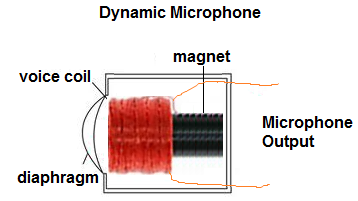
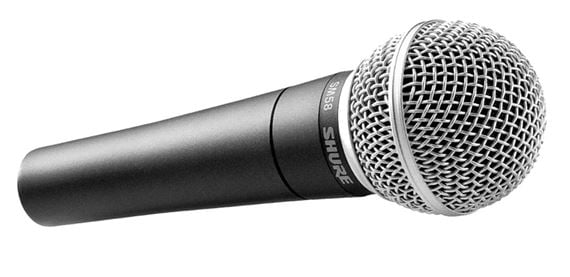
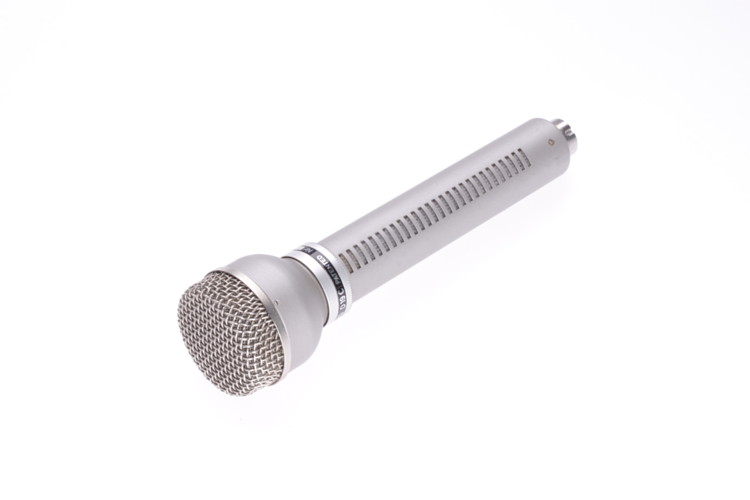
Dynamic microphones records sound by having a plate named the Diaphragm which is attached to a magnet that also has a coil wrapped around it. When the diaphragm vibrates in response to incoming sound-waves, the coil moves backwards and forwards past the magnet. This creates which is channelled from the microphone. Here a photo of how a dynamic looks
A condenser microphone has a diaphragm similar to the dynamic microphone but the condenser has another plat behind the diaphragm and in-between those plates is a voltage . A voltage is required for the capacitor to work. This voltage is supplied by either a battery or by external phantom power. The diaphragm vibrates when struck by sound waves changing the distance between the plates and therefor changing the capacitance. When the plates are further apart, capacitance decreases and a discharge current occurs.
 |
| Condenser Microphone |
Polar Patterns
 Cardioid
Cardioid mics are most effective at picking up sound from most infront of them and least effective at picking up sound behind them. Cardioid Mics are essential mics for considering a live music performance.
Omni-Directional
 Omnidirectional microphones are equally sensitive to sound arriving from all angles. Therefore, the microphone does not need to be aimed in any particular direction. This can be particularly useful when using a lapel mic to capture a speakers voice. The disadvantage of omni-directional is that it cannot be aimed at a specific source.
 Figure of 8
A microphone with a figure-of-eight polar pattern picks up the sound from in front of the microphone and from the rear but not the sides (90 degree angle). Microphones with a figure-of-eight polar pattern are typically ribbon or large diaphragm condenser microphones.
Super Cardioid

Super - cardioid microphones offer a narrower pickup than cardioids and a greater rejection of ambient sound. However, they also pick up a small amount of sound from directly behind. For this reason, it is particularly important to place monitor speakers to the side facing the 'dead spots'.
Microphone Specs
Multiple Area Recordings
For this lesson, I was set the task to go and record different tracks of different intruments in two different places. For the first set of recordings, I went into a different classroom and we recorded an acoustic guitar and a glockenspiel. We had the mobile desk and we set that up with a new track as well as setting up the microphone to record the different instruments. We placed the microhpone about 20cm away from the instrument before we started reocrding, the microphone we used for the recording was the C1000 condenser microphone. After setting up the microphone, the guitarist played a rhythm after which, we ended the recording and transferred the file from the computer and uploaded to SoundCloud.
Here is a playlist link on SoundCloud to the multiple area recordings
Final Recording
Here are my final recordings: